

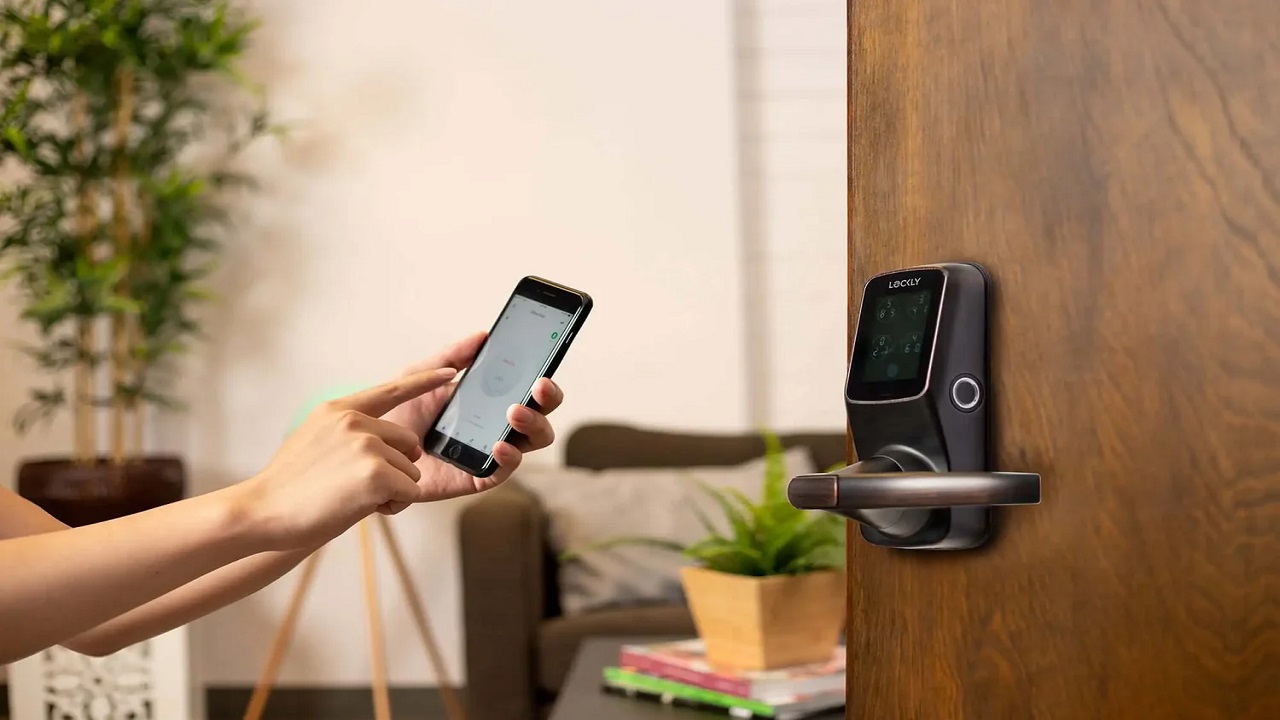
Quality control in the smart lock industry not only forms a part of the manufacturing process, but it also forms a fundamental aspect of user safety and confidence. Smart locks are used to secure homes, offices, and workplaces, and thus, they must be reliable. Any performance deficiency can undermine security, and this is the reason a fingerprint smart lock manufacturer is spending a lot of money on organized testing infrastructures. Electronic stability to physical longevity, all the parts have to be of high quality before they can be released in the market.
Accurate Engineering at the Outset
The process of quality control begins long before a smart lock is assembled. In the design and development phase, engineers test materials, electronic parts, and mechanical frames to make sure that they are compatible and durable. Wear, stress points, and environmental impact are predicted through advanced simulation. This initial validation is a way of minimizing the risks, and the end product performs well in the conditions of a real-life environment.
Adherence to International Standards
The smart locks of today should meet the international standards of safety and performance. Organizations with a good reputation ensure that they produce goods and services that correspond to internationally defined quality management systems like ISO9000. Adherence to these systems would enable uniformity in manufacturing batches and a well-organized system of inspection, documentation, and improvement. The products are also tested to meet the EU and US certification standards, hence they are appropriate in the international markets.
Lifecycle and Durability Testing
Lifecycle testing is one of the most important processes of quality control. The smart locks are opened, closed, locked, and unlocked repeatedly to recreate years of day-to-day usage. The tests determine the longevity of motors, sensors, lock bodies, and electronic circuits. Manufacturers produce products that have minimal flaws in their operation by recreating the long-term usage in a controlled setting, thus adding to the lifespan of the product before mass production.
Mechanical Strength and Impact Rigidity
Smart locks should not only be able to survive everyday life. Physical strength is tested by crash and drop testing locks, which are tested in accidents, forced handling, and transportation stresses. These tests ensure that the internal mechanism and the outer casing are observed to be functional even when subjected to sudden shock. Smart doors and armored lock systems have significance to structural integrity, and physical resistance is an element of the security definition.
Testing of the Environmental Corrosion
The environmental conditions are different all over the world, and the smart locks should be able to operate efficiently in every environment. Salt spray testing is a proven method aimed at testing corrosion resistance, especially of metal parts that are subjected to humidity or seawater. Further tests performed include temperature and humidity tests, which determine the behavior of electronics in extreme conditions of heat, cold, and moisture. Such tests guarantee that smart locks are not affected by such harsh conditions and do not worsen.
Electronic Stability and System Reliability
Other than mechanical strength, smart locks are dependent on electronic stability. The circuit boards, sensors, biometric modules, and control panels are checked by quality control teams that guarantee correct and consistent functionality. Power management systems are tested to verify battery efficiency and the emergency feature. Testing of software is also done to establish responsiveness, data security, and malfunction resistance of the system in case of repetitive use.
Constant Observation and Refinements
Quality control is not over after passing the initial tests on a product. In the process of mass production, the inspection is conducted several times during the assembly. The large volumes of uniform quality are maintained through random sampling and final checks of the products. The after-sales service and real-life usage feedback are also reviewed to correct future designs. This continuous review system enables manufacturers to respond promptly to changes and new technology.
Long-Term Reliability
A good quality control mechanism indicates that a manufacturer is geared towards reliable performance in the long term as opposed to temporary production. Companies can guarantee the reliability of smart locks through rigorous testing, certified management systems, and continuous innovation that will keep them reliable over the course of the service. This is the systematic approach to quality assurance that companies have pursued as a form of quality assurance, which emphasises durability, performance, and safety to the users. By means of rigorous tests and continuous enhancements, manufacturers such as Tenon enable the establishment of higher standards of smart security solutions globally.
Conclusion
The smart lock manufacturing is an overall procedure that encompasses design validation, mechanical testing, electronic testing, and environmental testing. All of these steps are crucial in making sure that the smart lock provides the quality of security in daily life. With the growing role of smart access solutions in the contemporary lifestyle, the existence of an efficient testing procedure will remain the indicator of the distinction between regular products and those that can be relied upon, in terms of safety.