How Large-Scale Farm Operations Choose RF Antennas for Sensor Networks That Actually Work
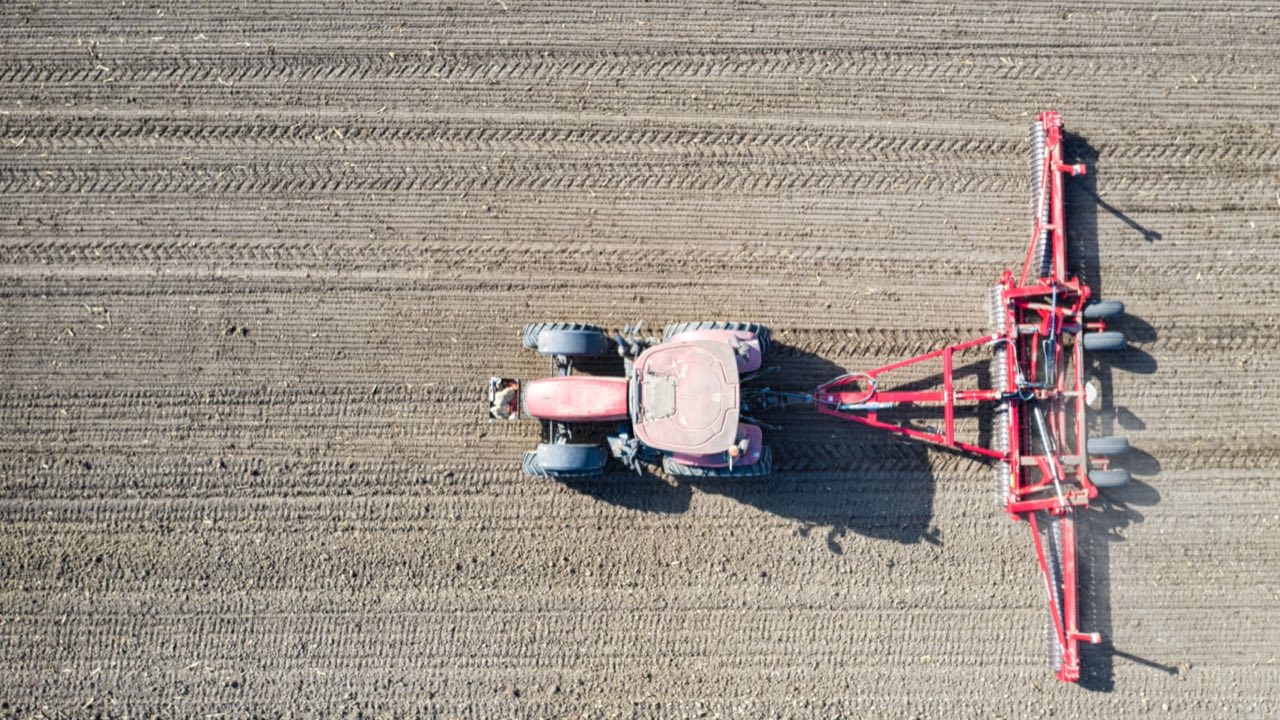
Running a large farm with a sensor network that covers the whole property sounds straightforward until you’re actually looking at a map of the terrain, counting the distance between the furthest field and the gateway, and trying to figure out why the soil moisture sensors in the back sections of the property send data three times a day when they’re supposed to send it every fifteen minutes. The antenna side of agricultural sensor networks doesn’t get much attention in the promotional material for these systems, but it’s where most of the real-world performance problems live.
Large-scale farm operations have RF challenges that differ meaningfully from smaller deployments and from the urban and suburban environments where most wireless technology is developed and tested.
The Scale Problem in Agricultural Deployments
A sensor network covering 500 acres isn’t just a bigger version of a network covering 50 acres. The relationship between area covered and gateway count is nonlinear because agricultural land doesn’t divide into tidy circles around a central point — it’s irregular, often elongated, and divided by natural features that complicate coverage calculations.
A field that’s 2km long and 500m wide presents a different coverage problem than a roughly square field of equivalent area. The furthest points from a central gateway in a long, narrow field are much further than in a square field of equivalent total area. A sensor network designed around a single gateway and a single coverage radius that works for the square field fails for the long narrow field.
Large operations also tend to have more variation in terrain and land cover than smaller ones. A 2,000-acre operation likely spans multiple soil types, includes sections with different crop heights at any given time, may cross a road or waterway, and often includes a mix of flat and mildly rolling terrain. Each of these features affects RF propagation in ways that need to be accounted for in the antenna selection and placement.
What RF Antenna Specifications Matter Most for Agricultural Applications
The specifications that matter for a farm sensor network rf antenna are different from what matters in a building network.
Gain and radiation pattern: agricultural sensor networks are almost entirely horizontal deployments. Sensors are in the ground or on vegetation at ground level, and gateways are mounted on poles or buildings at modest heights. The relevant RF path is roughly horizontal. High-gain omnidirectional antennas that compress the radiation pattern into the horizontal plane are generally appropriate for gateway antennas covering large flat areas — they concentrate signal where the devices are rather than radiating energy skyward.
For sensors themselves, the antenna gain requirements are more modest because the sensor is typically a node in a low-power wide-area network (LPWAN) protocol where the receiver sensitivity at the gateway is doing a lot of the work. Small, efficient antennas that match the sensor’s frequency and connector interface are more important than high gain.
Frequency: the choice of wireless protocol determines the frequency, and the frequency determines propagation behavior over agricultural terrain. Sub-GHz frequencies (868MHz in Europe, 915MHz in North America) propagate substantially further than 2.4GHz over agricultural terrain with the same transmit power. For a large-area deployment, the frequency selection is often more important than the antenna gain selection.
Weather resistance: agricultural antennas live outdoors. IP65 minimum for any antenna exposed to weather; IP67 or better for antennas installed in exposed field locations where direct water contact is likely. UV stabilization of housing materials matters for longevity in high-sun environments.
Gateway Antenna Placement and Height
Gateway antenna placement determines the coverage footprint of the entire sensor network in a way that individual sensor antenna choices cannot compensate for. A gateway antenna placed poorly — too low, blocked by a building, pointing the wrong direction — creates coverage gaps that more expensive or higher-gain antennas won’t fix.
Height is the most important variable. RF propagation over flat terrain follows the radio horizon — the distance at which the curvature of the earth and terrain features begin to block the signal path. Raising the antenna height extends the radio horizon. A gateway antenna at 5 meters height has a significantly smaller radio horizon than the same antenna at 15 meters. For large-area agricultural deployments, mounting the gateway antenna on a grain bin, a tall pole, or an existing building rooftop rather than on a short pole in the yard can meaningfully extend coverage without changing the antenna specification.
The direction the antenna faces matters for directional antennas. For omnidirectional antennas mounted on a pole, ensuring the antenna is vertical — not tilted by wind load or a poorly leveled mount — keeps the radiation pattern symmetric. A significantly tilted omnidirectional antenna performs more like a directional antenna pointing in the downhill direction.
When Multiple Gateways Are the Right Answer
For farms above a certain size or with challenging terrain, the right answer isn’t a better antenna on a single gateway — it’s multiple gateways. The coverage radius of any single gateway is physically limited by the combination of transmit power, antenna gain, and receiver sensitivity. More antenna gain can extend that radius somewhat, but there are practical limits governed by the regulations on transmit power for the frequency band in use.
A two-gateway network with gateways placed at opposite ends of a long property, each covering their half, will outperform any single-gateway configuration for that property geometry. The cost of a second gateway — hardware and the backhaul connection to get its data to the server — is often lower than the labor cost of investigating and troubleshooting the chronic coverage problems at the far end of a single-gateway network.
The decision point for adding gateways is when sensor reliability at the edge of the coverage area can’t be solved by antenna selection and placement changes alone. If sensors within the rated coverage radius of the gateway are still unreliable despite good antenna placement, the problem is likely interference or environmental factors rather than coverage, and those need different diagnostics.
Seasonal Variation in Agricultural RF Performance
Agricultural RF environments change seasonally in ways that affect network performance. Crop canopy is the most significant variable. A corn field in July — with 8-10 foot plants in full leaf — attenuates RF signals substantially more than the same field in April when the ground is bare. A sensor network that performs well at planting time may show coverage gaps when the crop reaches full height.
This seasonal variation needs to be accounted for in the network design phase. Testing coverage with a mature crop canopy in the field, rather than on bare ground, gives a more representative picture of worst-case network performance. Gateway antenna height that clears the crop canopy — or that’s high enough that the RF path angle is above the canopy for most of the field — reduces the seasonal variation in coverage.
Soil moisture affects ground conductivity, which affects the RF absorption at the soil surface. Very wet soil absorbs more RF energy than dry soil. Sensors embedded in or near the soil surface may show lower signal levels after heavy rain — not because the network is failing, but because the propagation environment changed.