Why ERW Pipe From Different Mills Isn't the Same Product
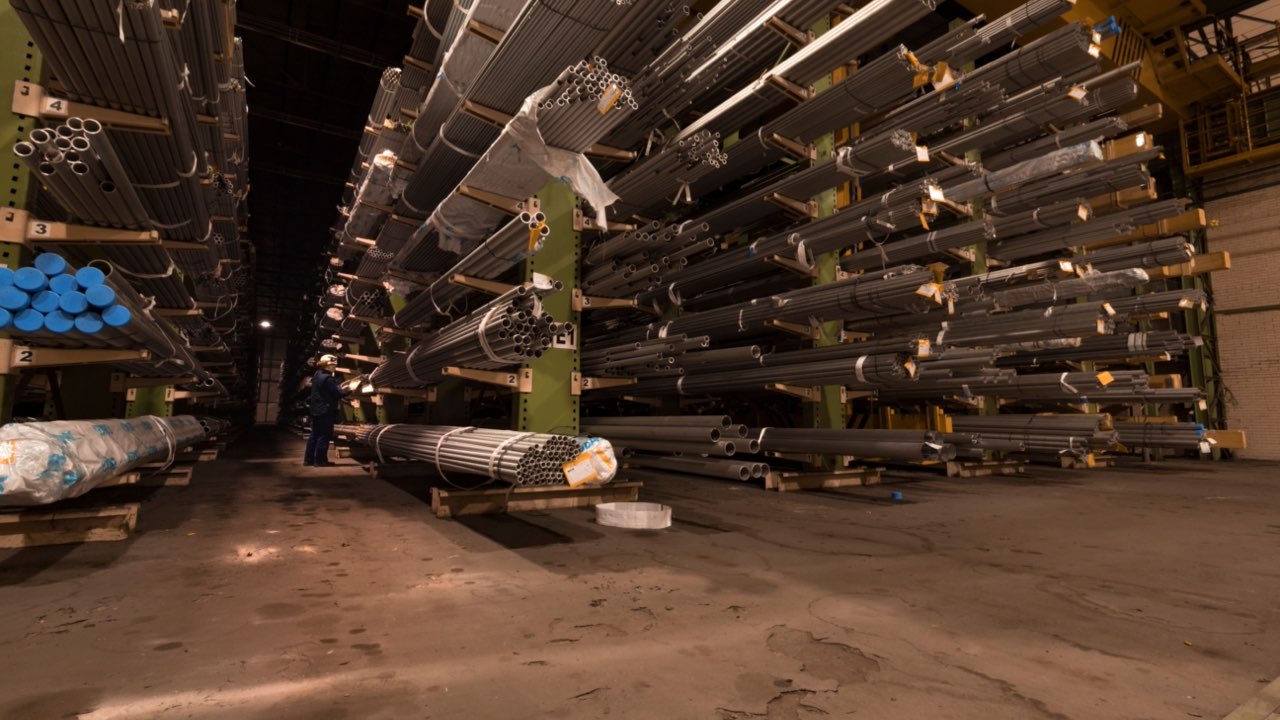
Walk into any steel service center and ask for ERW pipe, and you’ll get pipe. The OD will match. The wall thickness will be within tolerance. The mill certificate will say ASTM A53 or API 5L. On the surface, it looks like the same product regardless of which mill made it.
It isn’t. And the difference becomes apparent not during receiving inspection — where almost everything passes — but months later, under operating conditions that test the one thing you couldn’t see from the outside: what happened to the weld seam after it was made.
The Step That Separates Reliable ERW From Problem Pipe
ERW pipe is formed by taking flat-rolled steel strip, rolling it into a tube shape, and using high-frequency electrical current to heat the strip edges until they fuse under pressure. No filler metal is added. The weld is a solid-phase forge weld — the two edges become one piece of steel.
In a properly made ERW pipe, the weld zone and the surrounding parent material end up with essentially the same grain structure and mechanical properties. In a poorly made one, the weld zone is harder and more brittle than the surrounding steel — and that difference doesn’t show up in a dimensional inspection.
The step that determines which outcome you get is post-weld heat treatment, specifically weld seam normalization. After the weld is made, the seam area needs to be heated above the transformation temperature of the steel and then cooled in a controlled way. This relieves residual stress and refines the grain structure back toward what the base material had before welding.
Normalization takes time and energy. Some mills run it correctly. Others reduce the treatment time, lower the temperature, or skip sections of the seam. You can’t tell from looking at the pipe. The difference shows up when the pipe is cycled under pressure, exposed to impact loading, or used in a service where the weld zone is stressed in ways that testing at ambient temperature doesn’t capture.
When buyers encounter ERW failures in service — seam cracks, leaks along the weld line — the root cause is almost always incomplete or absent post-weld heat treatment, not a fundamental limitation of the ERW process itself. Well-made ERW pipe is reliable. Poorly heat-treated ERW pipe is a problem waiting for the right conditions.
What the Mill Test Certificate Should Tell You
The mill test certificate (MTC) is the primary document for verifying that the pipe meets the specified standard. Reading it correctly tells you more than whether the pipe passed — it tells you whether the mill was operating the process to a level that produces reliable pipe.
For ERW steel pipe to ASTM A53 Grade B or API 5L, the MTC should include:
Chemical composition — The carbon equivalent matters for weldability in the field. API 5L sets limits on carbon equivalent for pipes intended for field welding. A53 Grade B has simpler chemistry requirements but the CE should still be within a range consistent with reliable performance.
Mechanical test results — Tensile strength, yield strength, and elongation should be reported per heat or lot, not just as a generic “meets specification” statement. The values should be within the standard limits but also internally consistent — very high tensile with low elongation can indicate problems with the heat treatment.
Hydrostatic test pressure — ASTM A53 requires hydrostatic testing of each pipe length. The test pressure should be stated on the certificate. Some manufacturers report only that the test was performed rather than the actual pressure, which is less useful.
Non-destructive examination — ASTM A53 allows the hydrostatic test to be replaced by non-destructive examination of the weld seam (ultrasonic or electromagnetic). If the MTC indicates NDT was used instead of hydrostatic testing, confirm that the specific NDT method and coverage meet the standard.
Heat treatment — This is the one that separates the detailed MTC from the generic one. Some mills report whether post-weld normalization was applied, the temperature range used, and the holding time. Others say nothing. If the MTC is silent on heat treatment, it doesn’t mean heat treatment wasn’t done — but it does mean you’re taking the mill’s word for it without documentation.
What to Ask For Beyond the MTC
For project quantities where the pipe will be used in pressure service, asking for supplementary documentation before order placement is reasonable and most legitimate mills will provide it:
Weld seam inspection records — Ultrasonic testing records for the weld seam, showing scan coverage and any indications found and dispositioned. This tells you the weld was inspected, not just that the pipe passed a hydrostatic test.
Heat treatment records — Temperature charts and hold time records for the normalization process. This is the documentation equivalent of asking to see how the process was actually run, not just what the product was supposed to be.
Third-party inspection reports — For significant orders, having an independent inspector at the mill during production is the most reliable way to verify that heat treatment, inspection, and testing were performed as specified. The inspector witnesses the process rather than reviewing records after the fact.
Previous project references — Ask what projects the mill has supplied and whether you can contact the project engineer or procurement team. A mill that regularly supplies API 5L pipe to oil and gas projects will have reference contacts. One that can’t produce references may not have the track record in demanding applications.
The Price Signal and What It Means
ERW pipe is a commodity in the sense that multiple mills produce product that nominally meets the same specification. But commodity pricing assumes equivalent quality, and the variation in ERW quality is significant enough that price alone isn’t a reliable guide.
The mills with robust heat treatment processes, dedicated NDT equipment, and documentation practices that support traceability have higher operating costs than mills that minimize these steps. Their pipe will price accordingly — not dramatically more expensive, but not the lowest quote in a competitive RFQ.
When a quote comes in noticeably below the others for the same specification, the question isn’t whether the number is real. It usually is. The question is where the cost reduction is coming from. In ERW pipe production, the places where cost gets cut — heat treatment, NDT, quality documentation — are exactly the places that determine whether the pipe will perform reliably over its service life.
That doesn’t mean the lowest-cost supplier is always wrong for the application. For structural applications where the pipe carries mechanical load rather than internal pressure, the performance demands on the weld seam are different and a lighter quality standard may be appropriate. For pressure-containing service, it means asking the questions before placing the order rather than finding out afterward.